ChatGPT Restrictions 2025: No More Health or Legal Advice
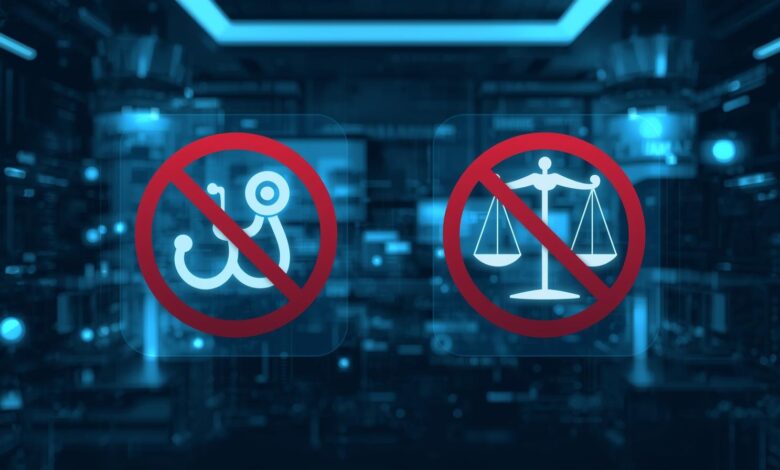
The digital world was shaken when OpenAI announced a major change: ChatGPT medical guidance limit. According to the ChatGPT restrictions update 2025, OpenAI has revised its policies to ensure AI legal advice ban remains responsible, ethical, and safe for global users. This move marks a new chapter in the evolving relationship between humans and artificial intelligence — one where boundaries are being redrawn to protect users and maintain trust. So, what exactly happened? Why did OpenAI new usage policy make this decision now? And how will these rules reshape how we use AI tools daily? Let’s break it all down.
ChatGPT Restrictions 2025: Why OpenAI Made This Change
Artificial intelligence has become a part of everything — from diagnosing diseases to predicting court cases. But with such power comes serious responsibility. The ChatGPT restrictions update 2025 is not just a random rule; it’s a calculated step toward protecting people from inaccurate or unsafe advice.
In the past year, several incidents showed how easily AI-generated medical or legal advice could mislead users. People started asking ChatGPT to analyze their symptoms or write legal contracts — tasks that require professional licensing and accountability. OpenAI realized that while AI can support, it should not replace licensed experts.
This is where the AI legal advice ban and ChatGPT medical guidance limit come into play. Both measures ensure that users don’t mistake AI’s general information for professional consultation. The goal isn’t to restrict access to information — it’s to draw a line between helpful knowledge and dangerous overreach.
What the New Policy Includes
According to the OpenAI new usage policy, several new rules now define how ChatGPT operates across industries.
- No Health or Legal Guidance:
ChatGPT will no longer provide personalized health or legal advice. It can still offer general educational content — for example, explaining what diabetes is or what a contract clause means — but it won’t advise users on what to do personally. - No Facial Recognition or Sensitive Data Use:
The update also prohibits AI from performing facial recognition without consent, a major privacy safeguard. - No High-Stakes Decision-Making:
ChatGPT can’t make critical decisions in fields like education, healthcare, or finance without human review. This ensures that people remain in control of major outcomes. - Transparency and Accountability:
The responsible AI regulations 2025 emphasize traceability — meaning every AI output must be reviewed and verified when used in professional or public settings.
These changes highlight OpenAI’s vision for a future where OpenAI new usage policy helps humanity but doesn’t overstep its ethical boundaries.
ChatGPT Restrictions 2025: Impact on ChatGPT Users Worldwide
For everyday users, the ChatGPT restrictions update 2025 will feel like a slight adjustment. You can still ask for general knowledge, creative writing, study help, or tech explanations — but if you ask for medical diagnosis or legal drafting, ChatGPT will now politely decline.
However, for professionals and content creators, the impact is bigger. Many people in health tech, education, or law used ChatGPT as a creative assistant or draft writer. Now, they’ll need to ensure human review is involved before publishing or implementing any AI-generated content.
This aligns perfectly with the responsible AI regulations 2025, which prioritize human oversight in sensitive domains. Rather than replacing experts, ChatGPT will now serve as a supportive tool — offering background info or formatting assistance while leaving final decisions to licensed humans.
As for users in regions with developing AI literacy, these restrictions can actually build trust. Knowing that ChatGPT follows ethical limitations makes it safer for everyone to explore AI technology without fear of misinformation or misuse.
Reactions from the Tech Community
The AI legal advice ban sparked mixed reactions online. Some tech enthusiasts see it as a smart move to prevent potential lawsuits or harm caused by wrong advice. Others argue that it limits innovation and user freedom.
Many developers, however, appreciate OpenAI’s transparency. The company’s commitment to public safety over popularity reflects maturity in AI governance. Experts believe that this move could inspire other AI developers to adopt similar OpenAI new usage policies to ensure ethical deployment across industries.
Moreover, AI ethicists are calling this change a “reset moment” — an opportunity to rethink what AI should and shouldn’t do. After all, no one wants a machine determining your medical treatment plan or interpreting your legal rights without accountability.
The Bigger Picture: Responsible AI Regulations 2025
Globally, governments are also tightening rules around artificial intelligence. From the European Union’s AI Act to the U.S. executive orders on ethical AI, the world is moving toward standardized oversight.
The responsible AI regulations 2025 go hand-in-hand with OpenAI’s approach. Together, they aim to reduce misinformation, protect privacy, and encourage transparency. In essence, the 2025 update represents the global shift from “AI can do everything” to “AI should do the right things.”
This is especially important in sensitive fields like healthcare, where misinterpreted advice could literally cost lives, or law, where a wrong suggestion could lead to injustice. OpenAI’s decision sends a clear message: AI is a tool for humans, not a replacement for experts.
ChatGPT Restrictions 2025: What This Means for the Future of AI Tools
Even with the ChatGPT medical guidance limit and AI legal advice ban, the future of AI remains bright. Instead of being direct advisors, models like ChatGPT will evolve into assistive companions — helping professionals work faster while keeping ethical standards intact.
We might see AI-powered systems that collaborate with doctors or lawyers but always include a “human review” layer. This hybrid model combines speed with responsibility, creating a balance between innovation and safety.
The OpenAI new usage policy also encourages developers to build niche tools — such as verified medical assistants or legal drafting aids — that operate under strict licensing and human oversight. So, while ChatGPT itself steps back from these domains, it opens space for specialized, trustworthy AI platforms to emerge.
Ultimately, the ChatGPT restrictions update 2025 isn’t a limitation; it’s a realignment — pushing AI toward a safer, more sustainable future.
Final Thoughts
This update might seem restrictive at first glance, but in reality, it’s a sign of growth. OpenAI’s bold step ensures AI tools like ChatGPT remain reliable, ethical, and human-centered. The AI legal advice ban, ChatGPT medical guidance limit, and responsible AI regulations 2025 all point to one thing — a safer digital future where AI assists without overstepping.
As users, this is our cue to adapt. Instead of expecting machines to replace professionals, we can use them wisely — as learning aids, research partners, and creative collaborators.
So next time ChatGPT says, “I can’t give legal or medical advice,” remember — it’s not holding back; it’s protecting you.